
You're Almost to Your Report! – But First, Scroll Down & Consider Selecting One of These Free Offers
Click on any investing offer that interests you—it will open in a new tab, so you won’t lose your place as you move toward your report.
🚀 Scroll down now to check out these top investing offers on your way!
A Breakout Could Be on the Horizon
Here’s How Some People Spot Small Stocks Before They Make Their Move
Some of the market’s biggest winners didn’t start as household names.
They began as small, overlooked companies quietly building momentum before the broader market caught on.
That’s why our research team recently released an in-depth guide on how people research undervalued small-cap stocks before they potentially break out.
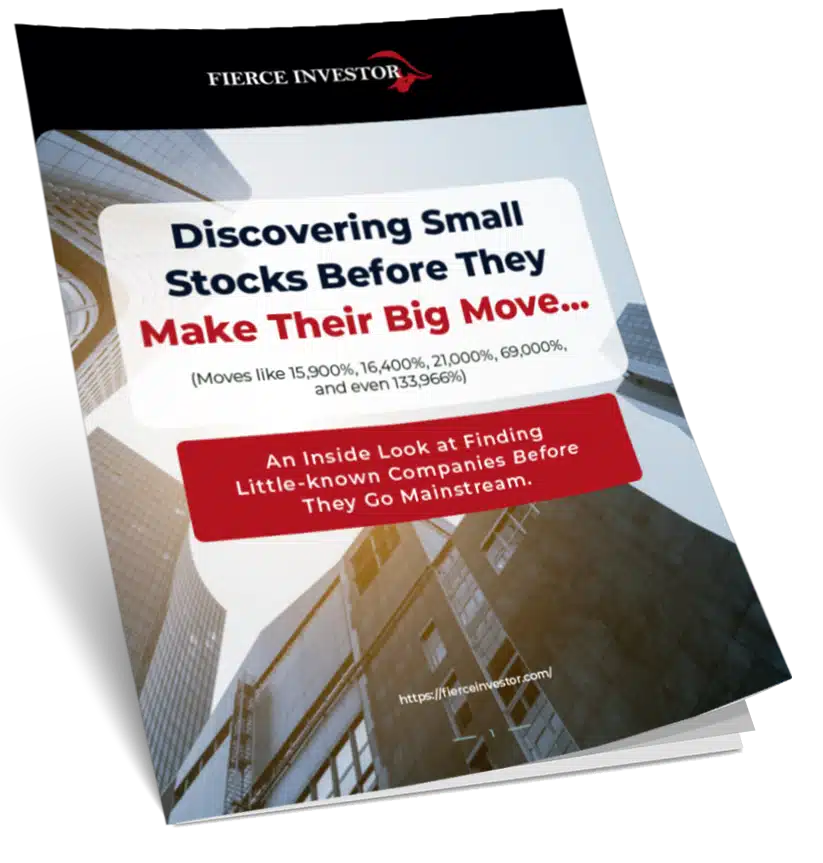
Inside, you’ll learn a simple method for evaluating emerging companies, spotting early catalysts, and identifying strategic setups in the micro-cap and small-cap market.
The guide also highlights one small company our team is currently monitoring that could be approaching an important moment.
Readers who access the guide can also opt in to receive a real-time SMS alert if our research team believes the situation may be nearing a key development.
Click the button below that says 'Get Access to the Full Report + Optional Real-Time Text Alert' and you will be redirect to a page that looks like the image below.


*We encourage readers to perform their own research and due diligence on any information we provide.
*By clicking the button above you are opting into receive email communication from Fierce Investor.
23,281 Stocks.
Only ONE survived.
The only American stock that passed all 4 tests
I screened 23,281 publicly traded companies looking for something almost impossible to find.
I wanted huge operating profits. Double-digit revenue growth.
Rapid dividend growth. And a market valuation so cheap it looked completely disconnected from the underlying business.
Only one American company survived every test.
One.
It generates more than $3 billion in operating income. Its revenue growth tops 15%. Its dividend growth exceeded 20% over the previous three years.
Yet its entire market capitalization remains below $8 billion.
That combination should not exist.
This is not an unprofitable AI startup hoping to make money someday. It is an established American energy producer sitting directly in the path of the AI electricity boom.
It also pays a dividend more than 300% larger than the S&P 500 average.
And while individual investors have largely ignored it, Wall Street institutions already own approximately 88% of the shares.
That is why I call it my Ultimate Stock Unicorn: wildly profitable, insanely cheap and almost completely unknown outside professional investing circles.
But out of 23,281 stocks, I found only one company with this exact financial profile.
I believe waiting until everyone recognizes it could mean surrendering the price advantage.
Click "Yes, Tell Me More!" below now to learn about the only American stock that passed my screen.
The top stock pick and ticker...
revealed for everyone to see.
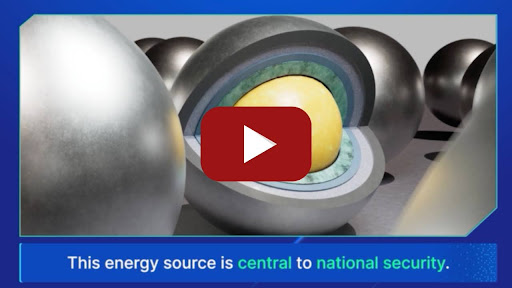
Project Janus.
Few people outside the White House, the U.S. Army, or Department of Energy are aware it even exists…
Yet it’s expected — and intended — to transform our nation in ways almost no one can imagine.
Powering AI … soaring electricity bills … statewide power outages — none of them will be a problem anymore.
The ENTIRE global energy sector — a $3.7 TRILLION industry — will be impacted.
The impact and opportunity could be so immense — for everyone, Adam O’Dell has decided to give away the name and ticker of his top stop pick … for FREE.
The innovative, new fuel at the heart of Project Janus is set to go online before December 18, 2026.
Click "Yes, Tell Me More!" below now to get all the free details — including the name and ticker of my #1 stock pick.
Elon Musk’s Insane Projection: 7,692,207%
Can he be right?
Where should you invest $100 right now?
Well, Elon Musk just invented and patented this new AI technology…
And he’s predicting it will launch a NEW industry that will grow more than 7 million percent in the coming years.
Think about how insane that is.
That would be enough to grow a single $100 bill into more than $7 million.
Even if Elon is only 10% right…
That would still be enough to grow $100 into more than $700,000.
That’s how big this opportunity is.
So please click "Yes, Tell Me More!" below to see the details because this breakthrough could create so much wealth that Elon Musk calls it…
“An infinite money glitch.”
Spotted: Elon crates at a U.S. Air Force base
4,000 of them are rolling out of a Tesla compound to critical sites across America…
Every week, these strange white crates leave a high-security Tesla compound in Lathrop, California.

They're showing up near the Hoover Dam. At an Air Force base in Georgia. In the heart of New York City…
An estimated 4,000 of them are now spread across 48 locations in 14 states. And more roll out every week.
But you won't see this on CNBC, and you won't read about it in the Wall Street Journal.
Because these mystery Elon crates have nothing to do with electric vehicles, space, social media, crypto, biotech, robots or AI…
But former hedge fund manager Adam O'Dell knows what's inside them…
(And he reveals it all in his urgent investment briefing)
Which is why he believes they will go down as Elon's greatest-ever invention… his biggest ever disruption.
On October 21, Elon is expected to share this new venture with the world.
Once he does, this is going to be everywhere — from Fox Business to your family's group chat.
Adams believes investors who get positioned before that date could walk away wealthier than they ever thought possible.
Everyone else will be reading about it after the stocks have already run.
I'd hate for you to be in the second group.
He’ll show you exactly what Elon is building, what's inside these strange white crates… and I’ll give you the name and ticker of one of his top picks to play it — completely free.
Click 'Yes, Tell Me More!' below to watch it now while you still have time to position yourself.